

Surety Bonds at Work
Surety Bonds: Seeing Project to Completion
Construction represents 10% of the U.S. Gross Domestic Product according to the U.S. Census Bureau. This $845 billion industry comprises nearly 650,000 construction companies and 5.7 million workers. With unparalleled competition in recent years, less predictable profit margins, and increased preferences by project owners for fixed price contracts and design-build project delivery, construction is a risky business.
Completion is the goal of everyone involved in a construction project. Although the purpose of a Surety Bond is to assure a qualified Contractor capable of completing the project, Contractors do experience problems, and default does occur. Fortunately, Surety Bonds protect private and public owners from the enormous costs of Contractor default. Surety Companies pay millions of dollars in claims each year and provide financial and technical assistance to Contractors so you get what you contracted for – a completed project.
The Surety industry plays an important role in the construction industry's success. The following case studies illustrate the many ways Surety Companies assure project completion.
Surety Provides Working Capital
Surety Companies may provide financial assistance directly to a Bonded Contractor, which enables the Contractor to continue its work program, pay Subcontractors and suppliers, and keep the project moving forward. This assistance may be provided at the Contractor's request without the involvement of the project owner and may occur without formal declaration of default.
Sureties' Chemistry With Contractor & Owner Results in Completed Project
A $38.7 million renovation of a 250,000 sq. ft. Bloomingdale's department store into university classrooms was just one of many ongoing projects for a major national contractor. The new facility included a main chemistry classroom building, a large glass enclosed concourse, and a parking garage – each with its own completion deadline.
The classrooms were top priority – they needed to be completed for the start of the semester in January. By July, the project was 61% complete, on time, and on budget. In September, however, the contractor filed for bankruptcy protection. Several subcontractors reduced to skeleton crews or left the site completely, and work was at a near standstill. When a major subcontractor supplying and installing exterior panels was not paid, he ceased work, and the project stopped completely.
The co-surety companies got involved early in the bankruptcy proceedings with debtor-in-possession financing. Through a quick infusion of major funding to the contractor and commitments to the major subcontractors to pay for completed and future work, the subcontractors remobilized quickly. In addition, the contractor worked out a staged occupancy plan with the owner and accelerated the schedule.
The surety companies maintained a presence at the job site, implementing incentives to keep critical project personnel on the job. The classrooms were finished in January and the concourse was completed for the owner's planned gala opening party in April.
According to the university architect, "Our entire organization was a bit anxious about the completion of this important facility after learning of the unfortunate bankruptcy filing by the contractor. However we were extremely pleased with the prompt and professional action taken by [the surety companies], which allowed the project to maintain its momentum by retaining the existing and effective management team of construction professionals. In all candor, it was a seamless transition which was undetectable to those unaware of the circumstances."
Surety Stands by Its Contractor
Shortly after its initial public offering, a large general contractor encountered financial difficulties. The contractor had significant losses on two projects and expected a $2 million loss on hotel projects that were behind schedule. In addition, the contractor's core clients, major retailers, cut back expansion plans that fostered the construction company's growth. As a result, the contractor cut staff 40% to lower operating costs.
To keep the contractor afloat, its sureties offered financial assistance. The majority owners of the construction company entered a joint control and escrow agreement that allowed the sureties to fund the completion of contracts and pay vendors in exchange for an interest in the construction company's two million shares of stock. The contractor completed its work and pursued an aggressive marketing campaign. Within two years, the company's sales were $54.5 million.
The construction company owner said that the firm is "gratified by the surety's assistance and obvious display of confidence in our experienced construction team."
Exploding Pilings Cause Contractor Headache
A $43 million bridge contract was over budget, and the contractor had given up any hope of a profit. With the job 95% complete, the bridge pilings began exploding -along with the contractor's hopes of completing the project.
When the State Highway Department stopped all payments to the contractor, including a large earned sum, the surety was called in to investigate. The surety advanced $4.5 million to the contractor and arranged analysis of why the pilings exploded in order to corrected the problem. Because the surety was notified in a timely manner, it was able to prevent contractor default. This assistance:
- kept the contractor from bankruptcy;
- completed the bridge promptly for public use;
- saved the owner from the delay of re-bidding the contract; and
- assured payments to subcontractors who were on the verge of bankruptcy themselves.
Firm Falls Apart, Surety Sends Rescue Team
The president and vice president of a highway-contracting firm were killed in an airplane crash. The heirs brought in a new management team who managed 21 contracts worth $109.5 million. Within a short time the formerly successful operation was in financial difficulty. With $27 million in work remaining, the firm owed $8 million to subcontractors and suppliers and had no cash flow. The surety brought in two recently retired successful highway contractors who determined that the company was a good organization. Under their direction, the company liquidated an equipment repair plant and set up effective cost accounting methods. The surety infused $6.8 million into the contractor's company, including $1.7 million to complete a non-bonded project to avoid jeopardizing the bonded projects.
Flood of Work Nearly Drowns Contractor

Building a hurricane and tidal flood barrier to protect a commercial and industrial section of town would ordinarily be a piece of cake for this experienced highway and bridge contractor. However, after contract modifications and equipment delivery delays caused a $25 million deficit, the contractor turned to his surety for help. Compounding the problem was the contractor's excessive overhead, inadequate planning, and insufficient long-term financing.
The surety company's investigation confirmed that the contractor was performing quality work and could complete the project with support from the surety. Rather than re-bid the contract, face a delay in completion, and subject the area to exposure in the event of a catastrophic storm, the surety quickly decided to finance the contractor.
The surety continued to provide financial assistance over a 10-year period. During that time, the contractor performed federal, state, and municipal contracts in excess of $410.6 million. Prompt intervention by the surety prevented a serious default and saved the project owners substantial sums by maintaining competitive bidding in the state and contributing to its economic development.
Surety Guarantees Bank Loans
When the Surety becomes aware of a Contractor's financial difficulties, the Surety may guarantee a line of bank credit. This assures a steady flow of materials to the work site and payments to Subcontractors.
Pollution Control Project Exhausts Funds
A city awarded an $82 million contract as a massive pollution control effort to a joint venture of three contractors, two of which were large, experienced firms with tunneling expertise. As the work progressed the joint venture experienced numerous unforeseen problems and conditions that resulted in a significant cost increase. The three contractors contributed corporate assets, but the operating fund was exhausted.
The contractors' sureties analyzed the situation, using an internationally known tunnel expert to establish completion costs. The sureties evaluated the financial position of each joint venture and the ability of each to contribute talent and labor. The joint venture requested financial assistance to complete the project.
The sureties guaranteed a $6.8 million revolving loan. With adequate financing, the project continued with no interruption of work, no changes in method of payments, and no intervention by the city.
Caught Between a Rock and a Hard Place
A $26.5 million contract with the U.S. Army Corps of Engineers called for the construction of a port facility for another nation as part of a foreign aid package. The contractor was required to excavate rock from a specified area and then construct a pier and protective area with this rock. The contractor was also required to dredge a channel and create a harbor.
When the area didn't yield the right type of rock, the Corps told the contractor to find it elsewhere. This proved to be a costly and fruitless search. The Corps then agreed to accept rock of less density and weight. However, this increased the contractor's cost so substantially that all his working capital and bank credit was soon exhausted. On the verge of default, the contractor sought financial assistance from the co-sureties.
The co-sureties paid off loans, and arranged a guaranteed line of credit for the contractor, who borrowed $19 million to complete the contract. The total cost exceeded $53 million, but with continued bonding and new profitable work, the contractor survived and continued in business.
Embezzlement Leaves Contractor Short
Employee embezzlement left a contractor, who had a healthy workload of more than $56.7 million, with little working capital. Banks stopped credit and called in their loans. The contractor faced default on several large federal contracts in various stages of completion.
The surety spent $11.8 million to pay outstanding bills, assisted the contractor with guaranteed bank loans, and avoided default on all jobs – including several urgent NASA and military contracts. Because of the surety's involvement, the work continued without delay.
Non-bonded Jobs Cause Near Default
A general building contractor suffered serious losses on non-bonded shopping center contracts when the owners became insolvent. This impaired the contractor's working capital and bank credit so drastically that he was on the verge of defaulting on several bonded contracts. The contractor contacted the surety, who arranged a $2 million guaranteed loan. The contractor completed all work without incident and the owners were never fully aware of the contractor's financial dilemma.
Surety Provides Technical Assistance
The professional expertise of the Surety Company and Surety Bond producer can minimize problems and losses on a project. Many Sureties employ professional engineers, accountants, and other technical staff or advisors that can help a Contractor succeed.
Surety Speeds Rush Hour Traffic
Rush hour commutes are frustrating enough, but when a major artery is undergoing construction, it can be intolerable. When construction is delayed due to contractor failure, it's torture.
An $18.4 million construction contract in Leon County, Florida called for the widening of a major roadway from four lanes to eight at the busiest intersection in the City of Tallahassee. The contract called for the construction of a fly-over bridge, access ramps, improvements to several feeder roads, and access points to dozens of businesses.
When the contractor faced financial difficulties, the surety company worked closely with him to maintain normal business operations. The surety company's claims team was comprised of a regional claims manager and claims representative, home office accountants, an engineer, and external consultants. The surety also retained a consulting firm familiar with contractor default. The consulting firm reviewed all project payments to subcontractors and suppliers and provided technical assistance on the day-to-day operations.
The surety kept a firm hand on the pulse of the project with frequent visits by the surety's Construction Services Manager – an engineer by training. The team of professionals worked together to review the contract, analyze the information, and develop a plan to complete the project. Their vast experience provided the essential elements necessary to address many circumstances that arose during the project's completion.
The surety entered into a financial assistance agreement with the contractor to facilitate project completion. In accordance with this agreement, the project owner deposited all contract payments into a checking account held jointly by the contractor and surety. The account was controlled by the surety to ensure all contract funds were used for the payment of labor and materials used on the project.
To keep operations running smoothly and the public informed of progress, the surety and the county hired a public relations firm to keep motorists informed of construction updates, traffic rerouting, and access restrictions.
The project continued without interruption and was completed ahead of schedule. The County Board of Commissioners expressed its appreciation to the surety for its role in the timely completion of the road project. The Board stated, "[The surety] has proven its resourcefulness and dedication to efficient and smooth running operations," and completion was a result of "[the surety's] quest for excellence and proven service.
Surety Bond Saves Penn State Season
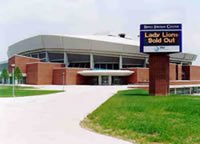
Which was more difficult to accomplish? Finishing construction on the 15,000-seat Bryce Jordan Center at Penn State University in time for the Nittany Lions' long-awaited Big Ten basketball showdown against Indiana? Or...Penn State winning that game against a formidable foe – then Hoosier Coach Bobby Knight?
As it turned out, neither was insurmountable, despite some preseason predictions to the contrary. "[The Bryce Jordan Center] isn't going to be ready for [Penn State's home opener] unless you bring in some construction people from Mars," said Knight, noting the significant amount of unfinished work on a visit to State College, Pennsylvania in the summer of 1995. "There's no American construction company that will get that done." Penn State "doesn't have the depth to challenge for the Big Ten Championship," said several league prognosticators before the season started.
So much for crystal balls. The Bryce Jordan Center was indeed ready for Penn State's surprising 82-68 victory over Indiana and it was also available for the 76-61 win over Minnesota 16 days earlier. In fact, the Nittany Lions liked their new home so much they finished second in the Big Ten standings and won an NCAA Championship series berth.
What behind-the-scenes forces enabled the speedy completion of the athletic complex when bad weather and financial difficulties of the general contractor threatened to delay its debut?
The situation at Penn State is an example of a contract surety bond working to perfection. Finishing construction on the Center on time seemed impossible after severe weather problems wreaked havoc on the construction schedule. The project was only 28 percent complete in February 1995 while 68 percent of the scheduled time had elapsed. The construction company, which helped build the Houston Astrodome and other sports arenas, was close to shutting down the project because of financial difficulties.
With the 1995-96 basketball season less than a year away, a shutdown was unacceptable to all parties. The surety recognized the importance of maintaining continuity on the job and arranged for the contractor's management team to work with a new contractor.
"Their managers were vital," said the new company's Project Executive. "They knew the drawings, submittals, and the process. We could never have accomplished this without the full cooperation of officials from the two construction companies, Penn State and the surety."
Due to the surety's intervention and support, the schedule was reworked and additional subcontractors and general contractors were hired to carry out various aspects of the job that had been done by the original contractor alone. The number of craft workers grew from 310 to 590 working two shifts for six and seven days a week.
A combination of prompt intervention, commitment of resources, and considerable financial support from the surety company got the project back on track and the doors to the arena open in time for an uninterrupted string of Penn State home victories.
To Students' Dismay, School Completed on Time
A contractor specializing in school construction had six projects underway when the school district declared him in default on a junior high school. This school was desperately needed by the fast-growing school district. But the contractor was on the brink of collapse and the declaration of default was the final straw.
The surety felt that the contractor could complete all six projects. An engineering and accounting survey revealed cash flow problems so the surety infused $3 million and employed a construction engineer and project superintendent. To the students' dismay, their junior high school opened on time that fall.
Surety Sends Team to Prison
A construction firm began work on an $8 million prison project. Initially, work proceeded on schedule. Soon, however, the contractor encountered difficulties with the project's specifications and drawings, which needed clarifications from the owner's project management team.
Progress slowed as the owner took increasingly longer periods to respond to the contractor's Requests for Information (RFI) and change order requests. Tensions mounted, the work slowed to a grinding halt, and the project quickly fell behind schedule. Several months later, the owner's project management team still had not addressed many of the construction issues critical to project completion.
As the project slowed, so did payment to the contractor. To compound the contractor's cash flow problems, he was unable to collect a large receivable on an unrelated non-bonded job. The contractor turned to his surety for assistance with completing the bonded prison job.
The surety dispatched its claims team to the job site. After conducting its inspection of the construction site and financial review of the contractor, they resolved immediate cash problems by advancing $500,000 to pay subcontractors and suppliers. They also appointed an on-site construction representative who monitored the contractor's work and helped the contractor and the owner's project management team resolve the outstanding RFI and change orders.
Finally, the surety supplemented the project management team with six additional engineers and job superintendents. This enhanced the contractor's coordination of the work and the project was completed successfully.
Surety Bails Out Sewer &Water Contractor
Life was good for a large sewer, water, and tunneling contractor. He had completed $34 million in projects with an aggregate workload of $68 million. He had bid 600 jobs in the last two years. Then his bank line of credit dried up, and more problems followed. Two projects worth $30.8 million had unusually high start-up costs. Labor problems on another project resulted in two years of substantial losses. More than $1.7 million in retainage was tied up in litigation for two years and he expected an additional $2.7 million in retainage to be frozen as well. What's a contractor to do? Call the surety, who
- Analyzed the bids on a $30.8 million project that had just begun;
- Investigated the status of retainage litigation;
- Appraised the contractor's equipment and recommended that some be sold;
- Analyzed the contractor's organization from field supervisors to top management;
- Developed a cash flow projection based on anticipated completion of all work in progress;
- Worked with the banks to develop a payment schedule for equipment loans; and
- Arranged bank credit for additional working capital up to $4.5 million (the contractor eventually used $3.3 million).
The surety got the contractor back on track before the contractor's problems affected the project, which protected the contractor's reputation and standing in the industry. Seventy-five employees and more than 400 material suppliers and subcontractors were paid. The contracts were completed without disruption and the owners and engineers were unaware of the surety's involvement. Although the contractor's retainage remained frozen, the surety's assistance was discontinued three months ahead of the projected date.
Surety Replaces Contractor
There are times when a Contractor cannot complete a project – whether due to unforeseen changes in the job, economic conditions, or other reasons that cause a Contractor to default. When this happens, the Surety may bring in a replacement Contractor to finish the job.
Paying the Bond Premium is Cheaper than the Alternative
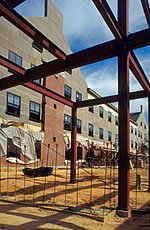
A well-established, family-owned contracting company had 16 bonded projects underway. When the State of California began licensing contractors, this company received the second license issued, but even contractors that have been in business for years can run into trouble. In this case, the last surviving family member had sold the company to five employees six years earlier.
The contractor was working on a bonded $20 million school building project that had significant cost overruns. It was the beginning of a huge financial strain on the company, which started spreading to the contractor's other projects.
The company defaulted on four projects: three senior citizen homes and one low-income community rehabilitation center. The default was a serious situation because many people would not be able to occupy their new living facilities. Furthermore, delays could result in a substantial loss in funding from the U.S. Department of Housing and Urban Development (HUD) and tax credits.
The surety acted swiftly by hiring a replacement contractor with an excellent track record on HUD projects. A special team was assembled to handle the complex federal and state documentation required to keep the job on track and in compliance with HUD regulations.
The original subcontractors, laborers, and suppliers were retained and paid for completed work. The surety satisfied all the liens on the projects and all necessary paperwork moved through channels without delay. The work was completed on time with no loss of tax credits or special financing. Most importantly, residents were able to occupy the premises in time to satisfy agency deadlines.
The owner was protected from financial loss and four important projects were finished on time. Without a bond, the loss to the owner on these four bonded projects would have been $1.86 million dollars. The premium on the bond that protected the owner from that expense was only $129,290.
Owner to Surety, "Job Well Done"
A California specialty contractor with a long history of successful projects faced financial disaster after the managing shareholder of this family-owned business suffered a stroke. An inexperienced son-in-law took over but was unable to manage the company successfully.
Finances were in serious disarray, and past due federal tax and bank loan obligations totaled several hundred thousand dollars. As a result, the contractor voluntarily defaulted on six bonded projects, of which four were not completed. More than 85 subcontractors and suppliers filed claims against the payment bond.
Because of timely investigation and intervention, the surety worked with the project's owners to replace the contractor on one project and took over and completed work on two other projects. The surety also paid the penal sum of the bond on another project that had barely begun.
One project owner wrote, "[The completion contractor under the takeover agreement] has completed all of the work required and all of the additional warranty and corrective work that was necessary to satisfactorily complete the project. Your cooperation and professionalism in handling this contract has been appreciated."
Surety Digs in to Relet Work
An excavation contractor in the southeast had eight projects in progress when infighting among the company's stockholders began. The dispute resulted in substantial operating losses and ultimately the contractor was forced to dissolve the business.
The contractor withdrew all of its work forces from both its bonded and unbonded projects and called the surety for assistance. The surety quickly investigated and arranged meetings with the eight owners within 72 hours of the contractor withdrawing forces. Within three weeks, the surety successfully relet all eight uncompleted projects, tendering four new contractors and taking over the balance of the work and subcontracting to a completion contractor.
The surety sustained a $2.5 million loss after reletting all of the projects and satisfying all of the outstanding labor and material payment bond claims.
What Else is Your Contractor Doing?
Surety companies and bond producers have a unique perspective of the contractor's business because they investigate the contractor's entire business operation, including bonded and non-bonded contracts. While a contractor may be performing adequately on your project, it may be failing on another.
With no warning, a contrator on a wastewater treatment plant in Leesburg, Virginia, declared itself in default on two projects for the plant totaling $16 million. According to town officials, the contractor had been doing excellent work. However, the contractor experienced problems on an unrelated project that affected its entire business.
The surety company proposed a new contract with a new company organized by the principals of the old construction company and bonded the new corporation. Since existing personnel were used, the surety company had the project up and running with only a two-month delay, which was critical to insure continued funding on the project. One town official noted, "This was the smoothest transition in a default I have ever seen."
Surety Completes the Project
One of a Surety's options is to take over completion of the project. The Surety generally negotiates a formal takeover agreement with the owner. This option may be used when the project is substantially complete or key Contractor personnel and Subcontractors are crucial to project completion.
Surety Steps into Contractor's Shoes
When the contractor on a $30 million student activity center for a prominent southeastern university became overwhelmed with problems and setbacks, the surety company made sure the project proceeded as scheduled.
The initial schedule called for completion in two years. However, subcontractor financial problems and performance defects, architect/engineer design and supervision deficiency, a lack of skilled labor and materials due to various concurrent projects, and adverse weather caused substantial, unforeseeable delays. After two years, the project was nowhere near completion, so the owner declared the contractor in default and turned over project completion to the surety company.
The surety company hired a new construction manager, but retained the project staff of the original contractor organization. The owner extended the completion date. The surety company authorized overtime, including work on weekends. Due to continued problems with the architect/engineer and certain subcontractors, a substantial amount of corrective work was necessary to complete the project to owner satisfaction.
The project was finished in time for the fall semester, just four months past the extension date. The surety company experienced an eight-figure loss, but the owner received the end product it was looking for. The vice president for business and finance wrote, "The surety company handled a bad situation as professionally and ably as we believe possible. I especially appreciate your seeing that the project was fully completed to the high standards of our original expectations. We are very proud of the facility and aware that its quality reflects in large measure your intervening hand. We never felt abandoned."
Surety's Quick Thinking Keeps Subs Paid and On the Job
A contractor hired by a local government to construct a municipal building abandoned the project with 75% of the structure completed. The owner declared the contractor in default and called upon the surety for completion. In order to meet its obligations and minimize loss, the surety hired a construction management consultant.
The surety needed to respond quickly since the building would suffer extensive damage if not finished before winter. The partially completed building had neither heat nor insulation. The surety and management consultant visited the job site to determine the condition of the work site, quality of work already completed, and the new projected completion date. After reviewing all available options, the surety decided to expedite the project by using the original 28 subcontractors and 12 specialty suppliers who were already familiar with the project.
The surety hired a field superintendent to monitor the project on a weekly basis and report progress to the construction management consultant and the surety. Additionally, the surety and architect reviewed payment claims and convinced the project owner to pay subcontractors and suppliers for completed work. Within four weeks after the subs returned, the municipality obtained a Substantial Completion Certificate followed by a full Certificate of Occupancy four weeks later.
Surety Saves Project From Subcontractor Failure
Subcontractors are vital to project completion. A subcontractor who is unqualified or has not been paid can affect your project. Surety companies pay hundreds of millions of dollars in losses each year – much of it to subcontractors.
Surety Keeps Job Moving Without Key Subcontractor
A subcontractor sustained losses on a number of bonded contracts and didn't have the cash flow to handle job costs on a $24 million subcontract for the installation of reinforcing steel and concrete at a large building complex, even though the prime contractor furnished the concrete and reinforcing steel.
The surety advanced funds for payroll and critical bills to keep the job moving. When it became apparent that the subcontractor still could not continue, the surety arranged for the prime contractor to employ the subcontractor's work force while it found a new subcontractor. The surety and prime contractor jointly arranged contract terms with the new subcontractor and the surety purchased heavy equipment to avoid disruption of the work schedule. The new subcontractor started operations after a brief one-week shut down and mobilization period.
The owner was aware that a key subcontractor had defaulted and observed the subsequent events, but did not in any way participate in the arrangements. The architect for the owner estimated that throughout the default and relet period, less than three days production was lost. The new subcontractor made up for lost time and completed the project on schedule. The owner's representatives expressed appreciation to all parties for the smooth transition.
The surety paid $4 million in completion costs and $3 million to subcontractors and for correction of defective work.
Surety Gives Green Light for Traffic Control System
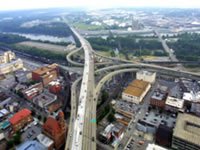
The Virginia Department of Transportation (VDOT) needed a sophisticated traffic management system on a bridge. The prime contractor hired a subcontractor to design and install the system. Unfortunately, the system was seriously flawed and never performed to the specifications mandated by VDOT. Since the traffic signaling system was a major component of the contract, VDOT filed a claim against the prime contractor and the performance bond.
The surety supported the contractor in an exhaustive investigation of the problem. With support from the surety, the contractor tried to correct the technical problems, but despite its best efforts, was unable to provide a workable traffic system. The contractor could not afford the cost of remedial work or the cost of outright replacement. VDOT declared the contractor in default and called upon the surety to correct the problems and complete the contract.
The surety promptly solicited proposals from other contractors with expertise in the very technical field of traffic management systems. Even the lowest responsive bid to replace the defective systems with workable ones required hundred of thousands of dollars in excess of remaining contract balances. The surety honored its obligations and provided a check to VDOT for the excess completion costs and tendered an acceptable contractor to complete the contract to VDOT's satisfaction.
Performance Bond Insulates Contractor & Owner
Owners can help the prime contractor manage risk by requiring performance bonds from subcontractors. When a subcontractor is a significant part of the job or a specialized contractor that is difficult to replace, bonding is a cost-effective way to limit the exposure.
On a $500,000 insulation contract for a hospital project, the owner required the subcontractor to be bonded. With no notice and only 40% of the project complete, the subcontractor ceased work, filed for bankruptcy, and disappeared.
The surety company contacted subcontractors, obtained bids, and tendered the completing subcontractor to the general contractor, picking up the difference between the contract price and the contract balances without delaying job progress. The general contractor was "very satisfied as well as surprised with the response of the surety company in replacing the original contractor and minimizing disruption to the project."
Panels Crack, but Bonds Hold Fast
A mason was subcontracted to install decorative limestone panels fastened to concrete block and pre-cast concrete panel exterior walls on a four-story savings and loan building. One stipulation was that the grout mixture had to be approved by the architect prior to commencing work.
The mason completed the work and paid his labor, but failed to submit the grout mixture to the architect. The mixture he selected contained ingredients that expanded in the presence of limestone and water. Within a year of completion, the panels began to crack around the hangers. Eventually, more than 70% of the panels had to be repaired or replaced.
The subcontractor was financially unable to do the repairs as required by the warranty. Because the subcontractor was bonded on the project, the surety company paid $465,000 for additional warranty work on what was originally a $600,000 project.
Plumbing Contractor Finances Go Down the Drain
A plumbing and HVAC contractor in the Midwest sustained substantial operating losses after diverting funds into a general contracting business. As a result, the contractor's bank cancelled the lines of credit and refused to approve any more loans.
The surety quickly conducted an investigation of the contractor's financial condition and elected to provide interim financial assistance while evaluating alternatives. The plumbing and HVAC operations were merged with another entity that assumed completion of all the contractor's work. As work progressed, the surety continued to provide financial support. The surety and the contractor sent voluntary default letters along with the tender agreements to each of the owners to ensure a seamless flow of work. All of the owners accepted the tender agreements and all of the contracts were completed on time and on budget.
The surety sustained a net $900,000 loss. The successor contractor continues to operate profitably.
Surety Mediation Prevents Default
When problems occur on a construction project, it's likely that the relationship between the owner and Contractor is strained. Having a third party, the Surety, investigate the problem can often result in a workable solution without declaration of default.
Surety Company Keeps the Peace
A hostile work environment invariably leads to problems on the job. Because the surety company is a third party participant in the completion of the project, it is in a position to help smooth relations between owners and contractors. When an owner's project manager did not get along with the contractor on a $532 million remodeling project of an historic lodge and garage, the fireworks began.
According to the contractor, there were problems from the start, which centered on the owner's demanding and unreasonable project manager. Only two months into the job, the contractor asked the surety company for help and advice after the owner threatened to declare the contractor in default. The surety company spoke with the contractor, then arranged a meeting at the job site with the owner and contractor. What the surety company representative witnessed was three hours of arguing and finger pointing.
Realizing the situation was out of hand and work would be delayed without resolution of the problems, the surety company's claims representative talked with the owner and contractor to get an understanding of both sides of the issue. A few days later, the claims representative went to the job site and spoke with the contractor's crew and subcontractors, the project manager, and the owner.
The surety company objectively addressed the contractor's deficiencies in performance and offered suggestions for improvements. The surety convinced the owner to remove the project manager from the job and make timely payments to the contractor. The owner and contractor agreed to follow through on the surety company's recommendations. The owner and contractor both acknowledged that things were much improved and the job was progressing well. Since the surety company's involvement, no performance or payment claims were filed. The owner took possession of the building and the contract was completed as scheduled.
The contractor appreciated the surety company's involvement, saying "It appeared that our company faced termination, but due to the immediate response by the [Surety Company] Loss Control Team, we were able to interface with the owner and resolve issues before the project went completely bad and any legal action developed. Thank you for your professionalism and standing behind your product."
Surety Heads Off Litigation with Compromise
A medium-sized general contractor obtained a bond for a day care facility at a local junior college. Over the next several months the job proceeded satisfactorily and on schedule.
As the project reached substantial completion, the college submitted its punch list to the contractor at the same time the contractor billed for its last progress payment and final retention. The contractor objected to several items on the punch list and refused to correct them. The college refused to honor the contractor's request for payment. The dispute escalated until the college declared a formal default and terminated the contractor's right to proceed with completion of the remaining punch list items.
The owner sent a default termination letter to the contractor's surety. The surety promptly met with the contractor to hear his side of the dispute, then met with representatives of the college and heard their side. The surety then called a meeting of both parties at the day care facility where it succeeded in establishing a spirit of compromise. The surety reviewed each item on the punch list and facilitated a resolution, thus avoiding expensive and protracted litigation.
The Cost of Not Bonding
No matter how well a Contractor is screened and no matter how stable the Contractor's business is, every project runs the risk of Contractor failure. Here's what happened when Performance and Payment Bonds were not required.
A Contractor's History Is No Guarantee
When Northland College in Ashland, Wisconsin decided to build the $12 million Larson-Juhl Center for Science and the Environment, the Board of Trustees didn't require performance or payment bonds.
According to Harold Vanselow, Vice President of Finance and Administration, the college's Board of Trustees chose the contractor "because of their history with the college…The company had been in business for over 100 years and the owner's great-grandfather laid the first stone for the first building of the college when it was built in 1892." A former owner was at one time a trustee himself, and the company had successfully performed other projects for the college. By all accounts, it appeared the college made an informed decision on choosing a contractor.
Vanselow stated that, "The project continued on schedule and on budget, and the college made all payments to the general contractor in full, and on time." It came as quite a surprise when, after the project was nearly complete, seven subcontractors filed liens totaling nearly $900,000 because the contractor hadn't paid them.
Because the Board of Trustees was so eager to develop a great science facility, it did not recognize the value of a bond. The Board believed the $70,000 - $100,000 bond premium could be better used on equipment and supplies for the new building. Now the college must find a way to settle $900,000 in liens on the completed project.
Realistically, a contractor with a 100-year history of work on college projects who has successfully completed similar projects for similar contract amounts, and who had a good reputation with the owner doesn't sound like much of a gamble. But the risk in construction often lies in the uncontrollable, unpredictable, and unknown.
According to one of the subcontractors on the job, the contractor was having financial difficulties because of some problem jobs a few years earlier.
Surety professionals make informed decisions to prequalify the contractor. They look at the financial strength of the contractor, the management structure and ability, the volume and makeup of other work the contractor is performing, as well as the character and reputation of the contractor. Any one of these elements can cause them to fail. This unique relationship with a contractor allows him or her to evaluate each element and guarantee that the contractor can complete the job for the owner. Reputation alone does not complete contracts and a solid contractor can become an insolvent contractor very rapidly if one or more of the elements changes. The small fee for prequalification and the surety's financial guarantee of the project are very valuable products to an owner. The relationship that an owner has with a contractor is arm's length while a surety's relationship is a day-to-day partner. A surety has much greater insight as to a contractor's abilities to perform than any owner could possibly have.
No Payment Bond Hurts Owner, Subcontractors &General Contractor
Two physicians hired a general contractor to build a medical facility. Construction began in October and was to be finished March 1. By February, the contractor had already received three draws from the construction loan of almost $245,000. The physicians were surprised when subcontractors and suppliers began calling in March to complain that they had not been paid. They confronted the contractor and decided to write future checks directly to the subcontractors and suppliers.
The contractor admitted that he was using the doctors' funds to bail out other projects. He promised to reimburse them when these projects went into the black.
The contractor's "good intentions" were not enough - not for the doctors and not for the district attorney and the California Supreme Court. The court agreed with the district attorney that it was irrelevant that, at the time of the wrongful diversion, the defendant may have had the purest of intentions and sincerely wanted the project to be completed and the creditors to be paid. Both the district attorney and the court cited the strict wording of California Penal Code. The code specifically calls for completion and payment and that funds diverted in excess of $25,000 was sufficient for a felony conviction. A payment bond would have protected all parties, even the well-intentioned contractor!
The Cost of Non-Compliance
The failure to obtain surety bonding for a public project can be a costly oversight, as the members of a Missouri school board learned. Board members were held personally liable when they failed to make sure an architectural firm posted a payment bond on a school renovation project.
The school district had hired the firm for architectural and engineering services which, in turn, hired another company to perform the mechanical and electrical work. The school district paid the architectural firm but it went out of business without paying the mechanical contractor the $20,145 it was due. The mechanical contractor sued the directors of the school board under a state law requiring public officials to obtain a payment bond from contractors on public works. The directors argued that the services did not constitute "labor" under the law.
The Missouri court sided with the directors, but the State Court of Appeals reversed the decision. It noted that designers could file liens for work in the private sector and should have bond protection on public jobs.
"It was the absolute duty of the directors ... to require a payment bond," the court said.
~ Article Information From: Surety Information Office
Free Quote
No Obligation
Viking Bond Service does not share or release email addresses, phone numbers or ANY other personal information to unauthorized third parties. View our Privacy Policy
Get Started:
Need a Motor Vehicle Dealer Bond? Viking provides MVD Bonds nationwide. Great rates and fast quotes. Good and bad credit.
Get the information you need to get your Auto Dealer Bond fast and easy from start to finish.
Viking Bond Service, Inc. offers Cyber Security Insurance across the entire nation. Learn more about how to obtain a Cyber Liability Insurance coverage today.
You may still be able to get approved despite challenged credit.
Learn about the bonding process. Viking will guide you step by step from application to bond in hand.
